Best Time to Cycle in Croatia
Seasons matter when you’re riding in Croatia! Learn when to go, which regions are best when, and how to avoid the crowds during the high season.
Don't want to read all this?
We've planned 800+ cycling trips. Send your dates, fitness and group size — we'll map the route and book every night.


Croatia stretches from the Adriatic coast to the Dinaric Alps, which means it has both Mediterranean and continental climates. The coast and islands enjoy mild winters and hot, dry summers, while inland and mountain areas see colder winters and more rain or snow.
What Should You Know at a Glance?
Spring (Mar–May): Start of the cycling season, quiet roads, lush scenery
Summer (Jun–Aug): Peak tourist season, best for coastal and island rides
Autumn (Sep–Oct): Fewer crowds, great for long tours and mixed routes
Winter (Nov–Feb): Off-season, limited services, colder and unpredictable weather
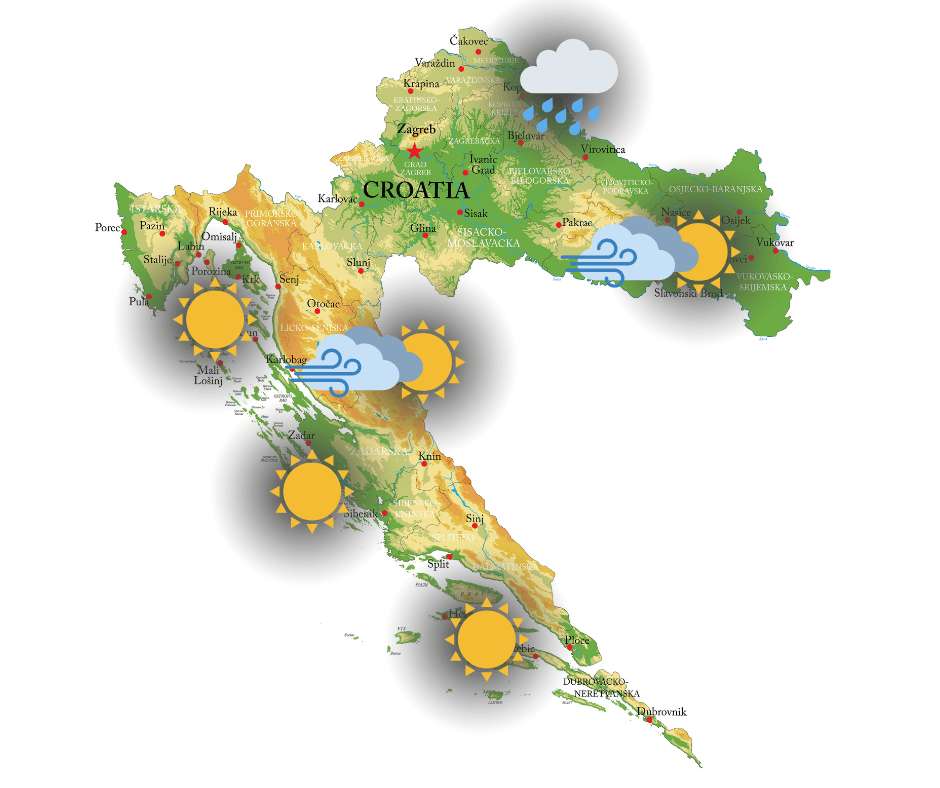
Month-by-Month Breakdown
Each month offers a different experience when cycling in Croatia — from quiet spring roads to long, sunny summer days and colorful fall scenery. Here’s what to expect:
Best Time to Ride by Region
Croatia’s regions vary — sunny coastlines, green inland hills, and island routes all have their ideal season. Here’s what you need to know:
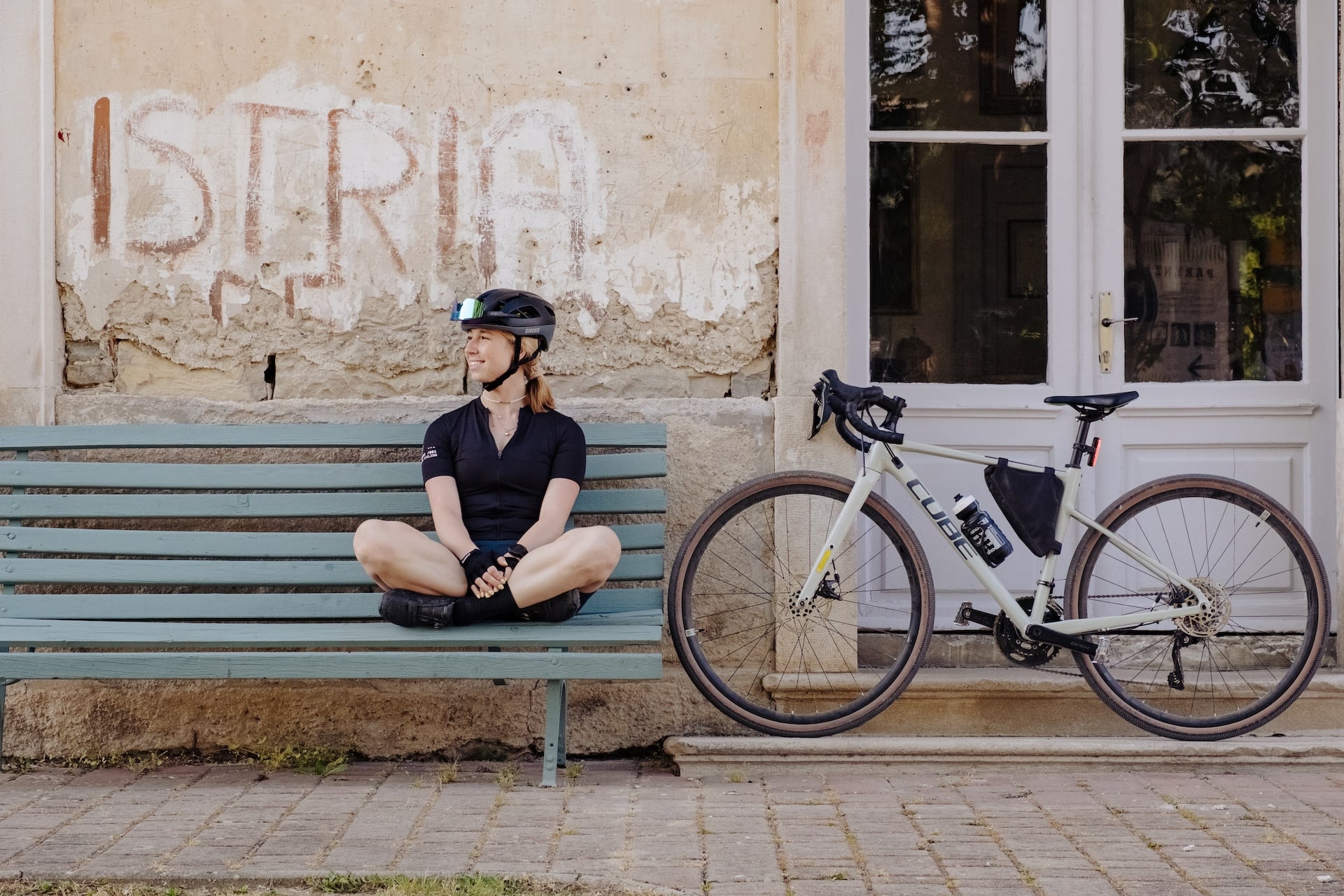
Istria
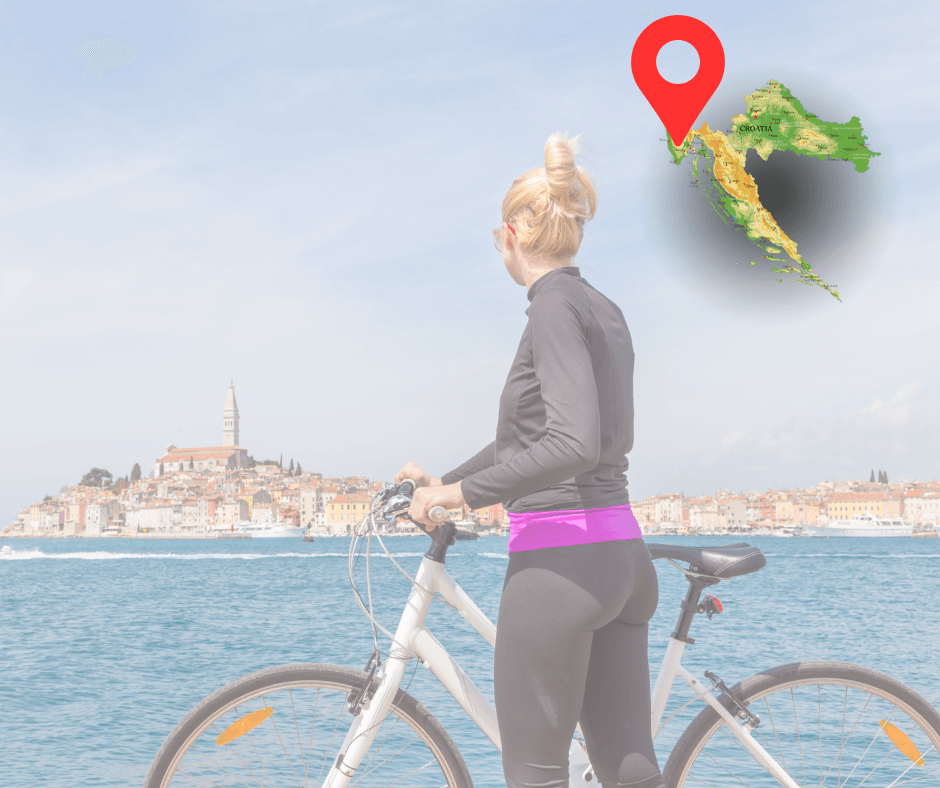
Climate: Temperate Mediterranean. Warm summers, mild winters, and moderate rainfall.
Best Time: April to October.
Why: The Istrian Peninsula offers rolling hills, vineyards, and coastal roads with pleasant weather and long daylight hours for most of the year. Spring and autumn provide ideal temperatures without the tourist crowds.
What to Expect: Average summer highs reach 25–28°C (77–82°F), with low rainfall from June to August. Spring and autumn hover between 18–23°C (64–73°F). Winters are cooler and wetter, especially inland.
What to Watch Out For: Occasional bora winds in spring and early autumn can make coastal rides breezy.
Pro Tip: Ideal for wine-country routes, olive groves, and the scenic Parenzana Trail linking Croatia, Slovenia, and Italy — perfect in late spring or early autumn.
Dalmatia
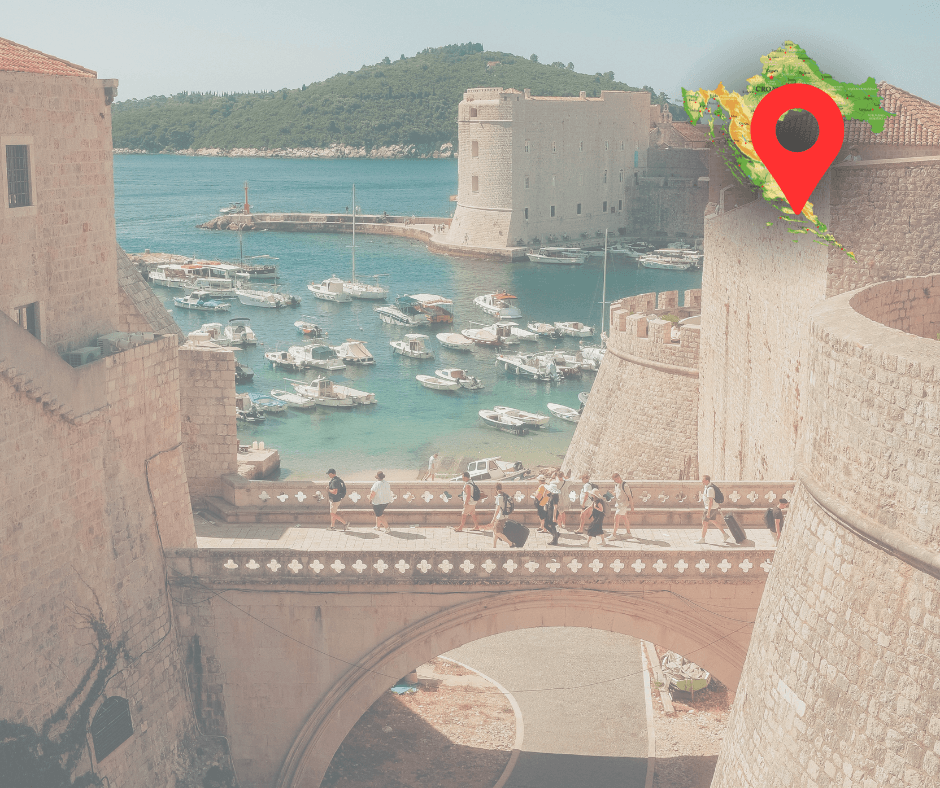
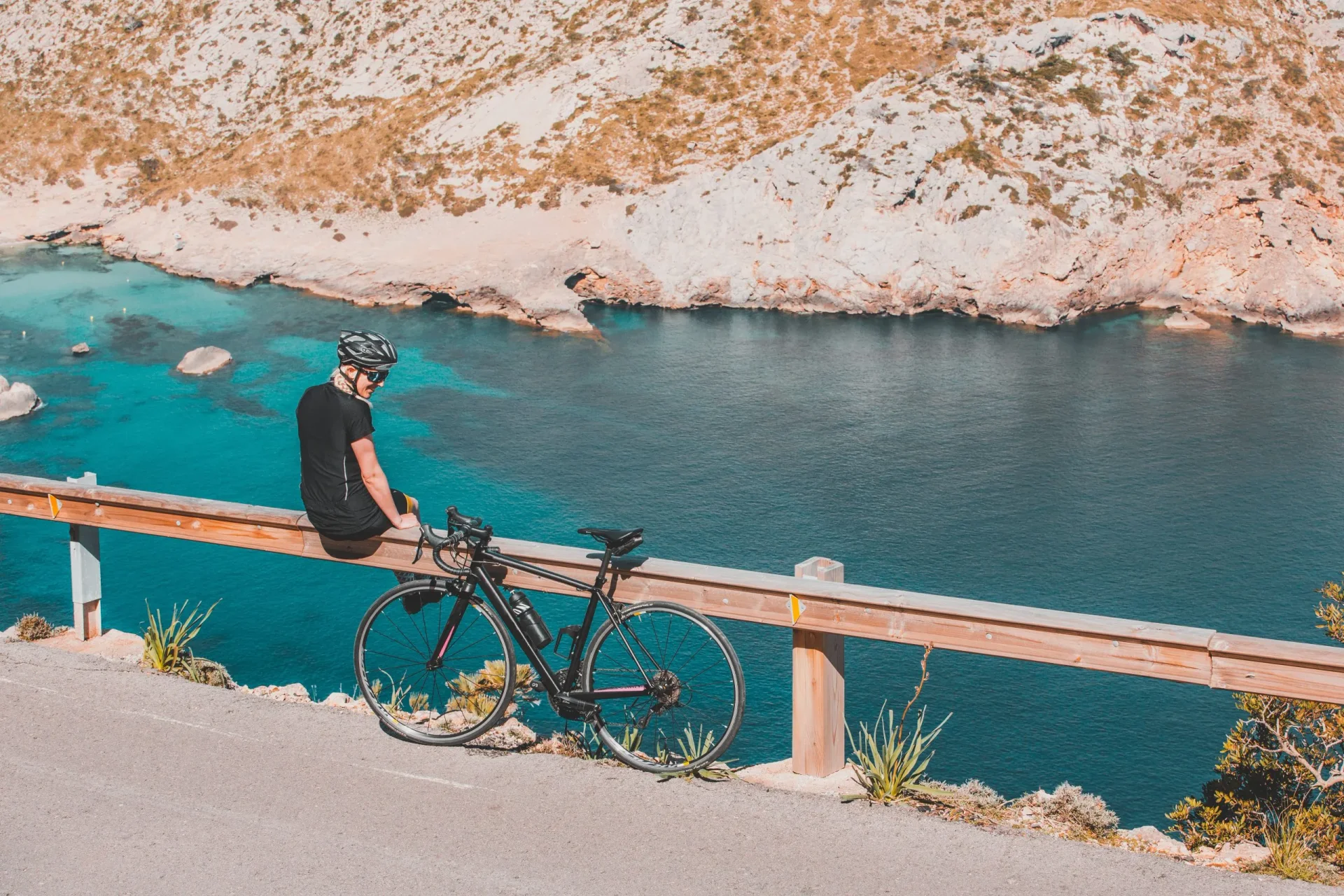
Climate: Classic Mediterranean. Hot, dry summers and mild winters.
Best Time: May to October.
Why: Dalmatia offers diverse cycling conditions — coastal roads, inland karst plateaus, and access to nearby islands — all under steady sunshine.
What to Expect: Summer highs of 28–32°C (82–90°F) with very low rainfall. Spring and autumn bring temperatures between 20–26°C (68–79°F), ideal for longer rides. The sea breeze helps regulate heat along the coast.
What to Watch Out For: Strong summer sun and limited shade on some inland routes; plan early morning starts in July and August.
Pro Tip: Combine Dalmatia’s coastal routes with ferry-linked island rides for the best mix of scenery and terrain — especially around Split, Makarska, and Dubrovnik.
Islands (Krk, Pag, Hvar, Brač, Korčula)
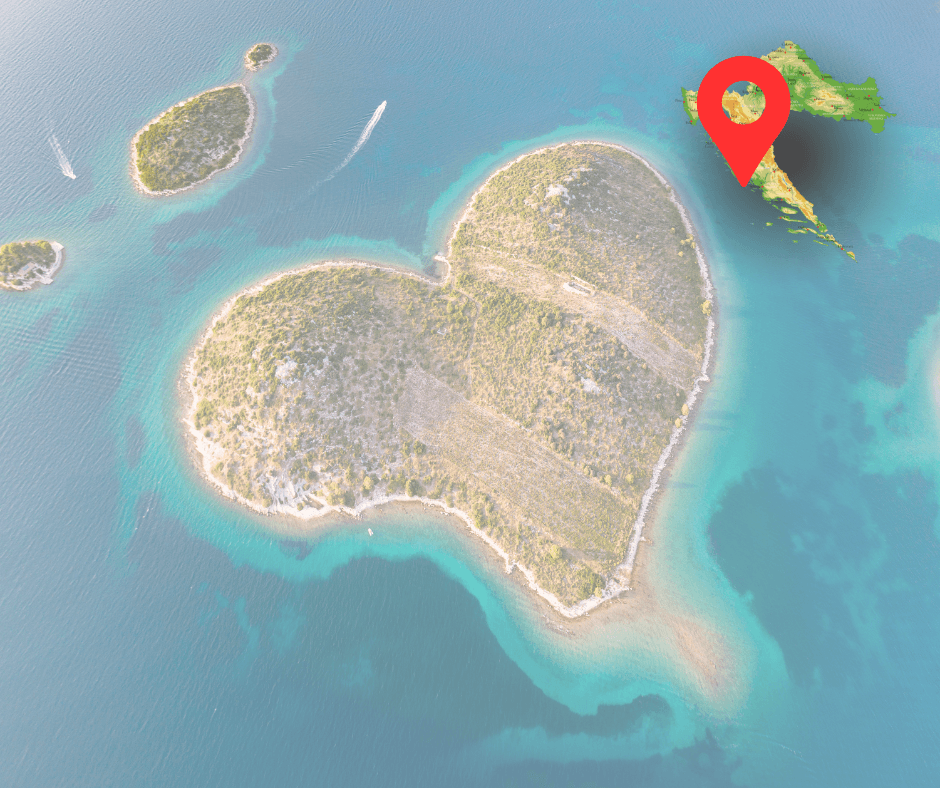
Climate: Mild Mediterranean with dry summers and short, cool winters.
Best Time: May to October.
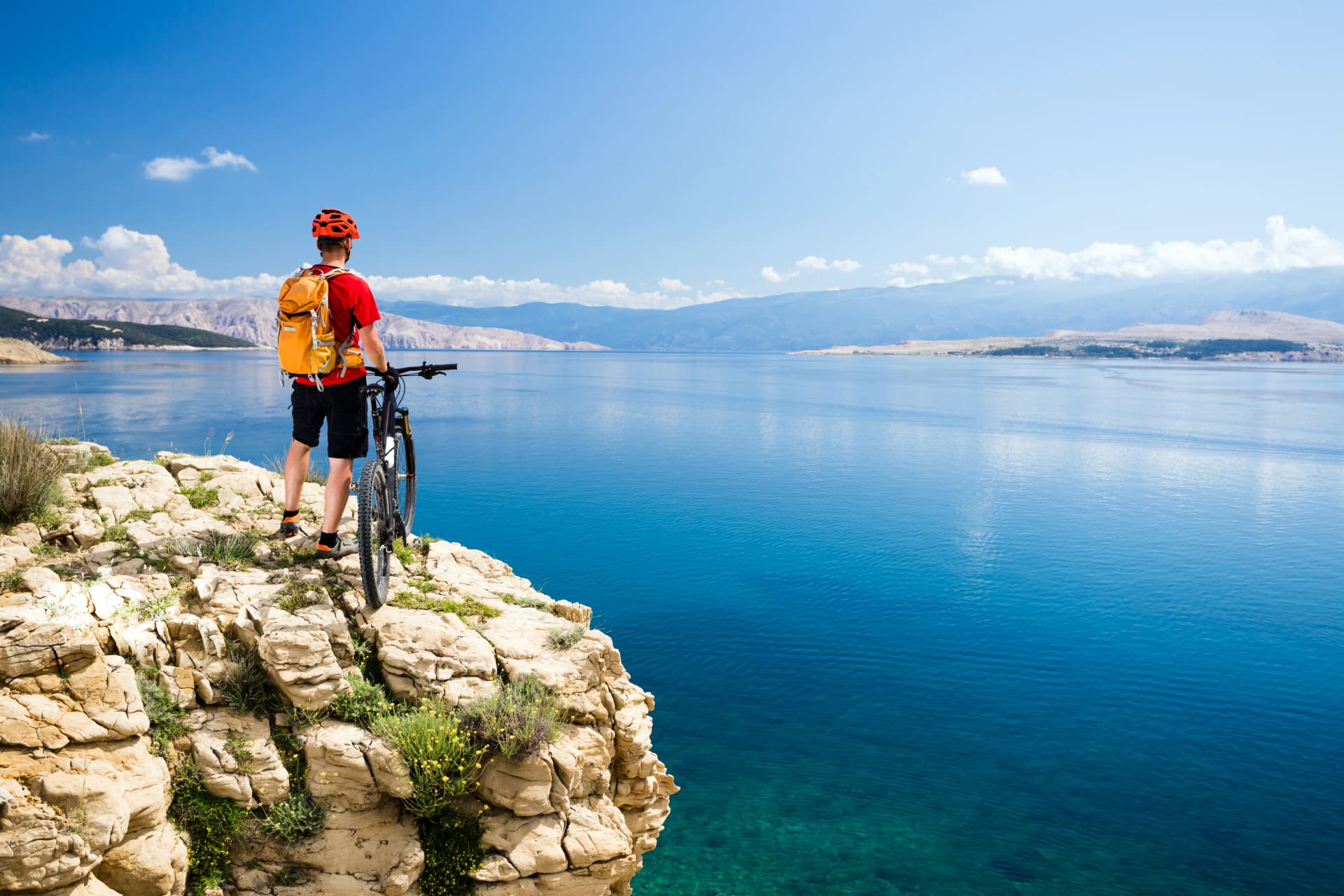
Why: The islands offer quiet backroads, sea views, and ideal cycling weather from late spring to early autumn. Ferry access makes them perfect for multi-island itineraries.
What to Expect: Average highs of 26–30°C (79–86°F) in summer, with minimal rainfall. Krk and Pag in the north are slightly windier, while Hvar and Korčula in the south are among Europe’s sunniest islands, averaging over 2,700 sunshine hours per year.
What to Watch Out For: The bora wind can occasionally affect Krk and Pag in spring and autumn. Accommodation and ferry schedules become limited after October.
Pro Tip: Ideal for scenic coastal circuits and relaxed pace rides. Start early in summer to enjoy empty roads and calm ferry crossings — and cool off with a swim after the ride.
Seasonal Considerations
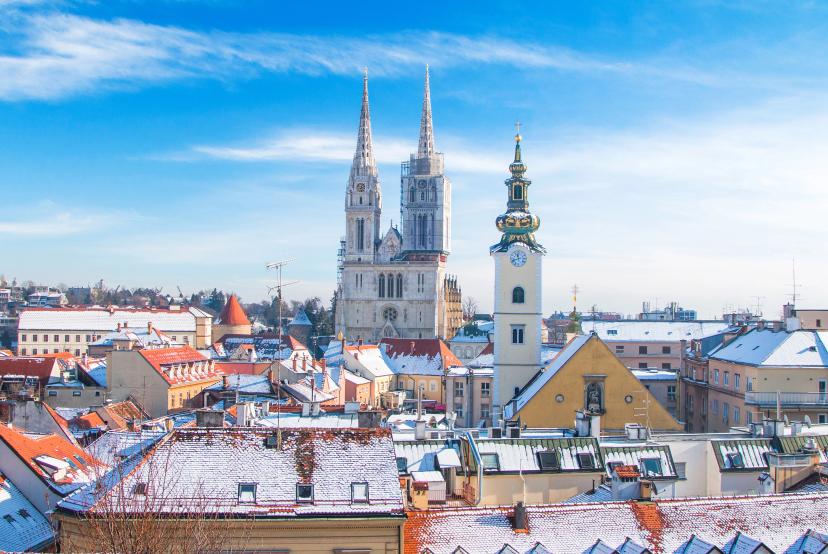
Croatia’s cycling season overlaps with its peak tourist season, which means crowds can be an issue — especially in July and August when the coast and islands are busiest. Ferries, beaches, and historic towns fill up quickly, and accommodation prices rise.
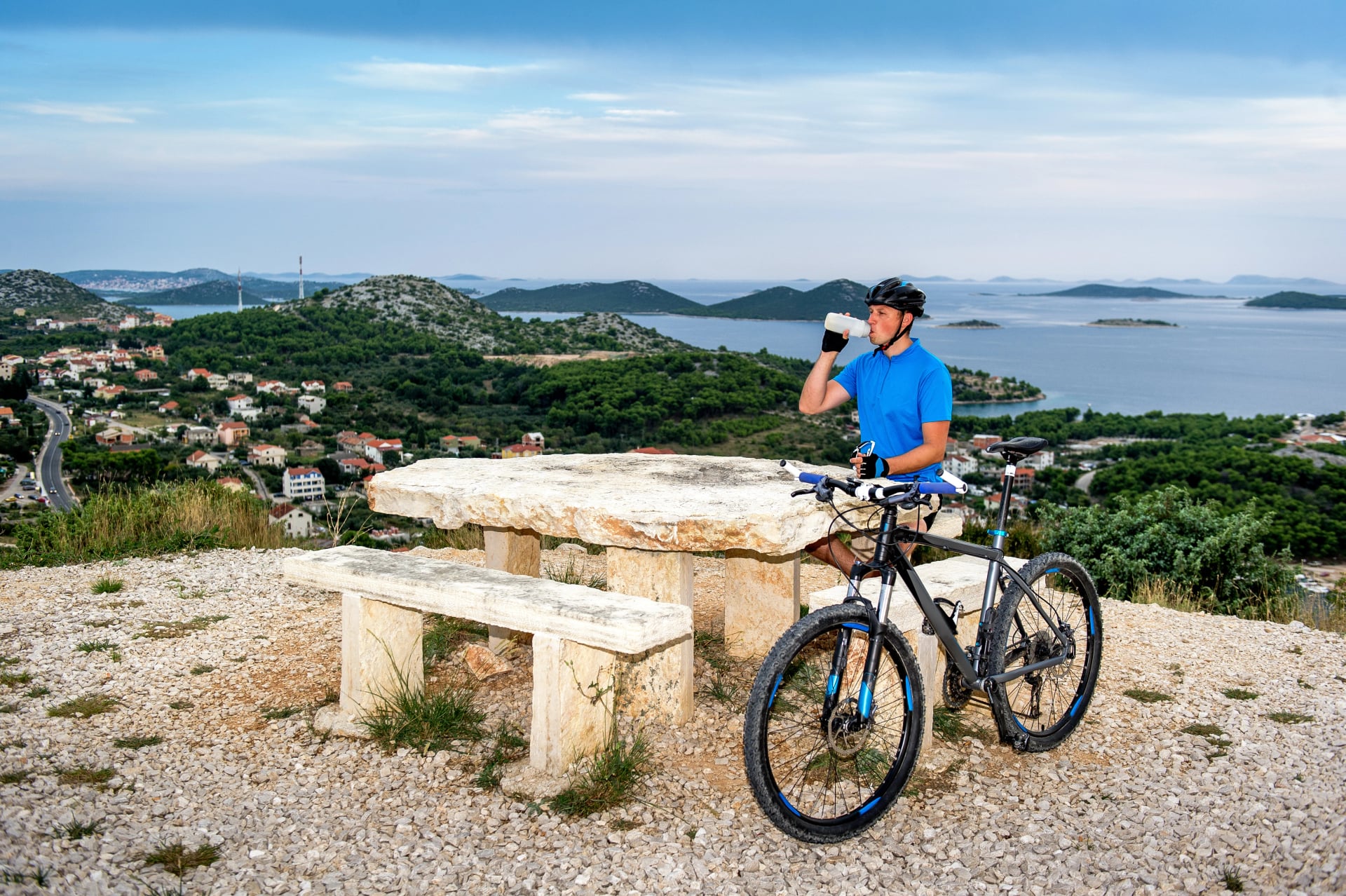
If you prefer quiet roads and a more relaxed experience, plan your trip for May–June or September–October. You’ll still get warm, sunny weather, but with lighter traffic, shorter ferry queues, and emptier coastal routes.
Even in summer, there are ways to avoid the crowds. We know the quieter paths, local ferry timings, and the best places to ride away from tourist hotspots - let’s plan your cycling holiday!
Where to Check the Forecast
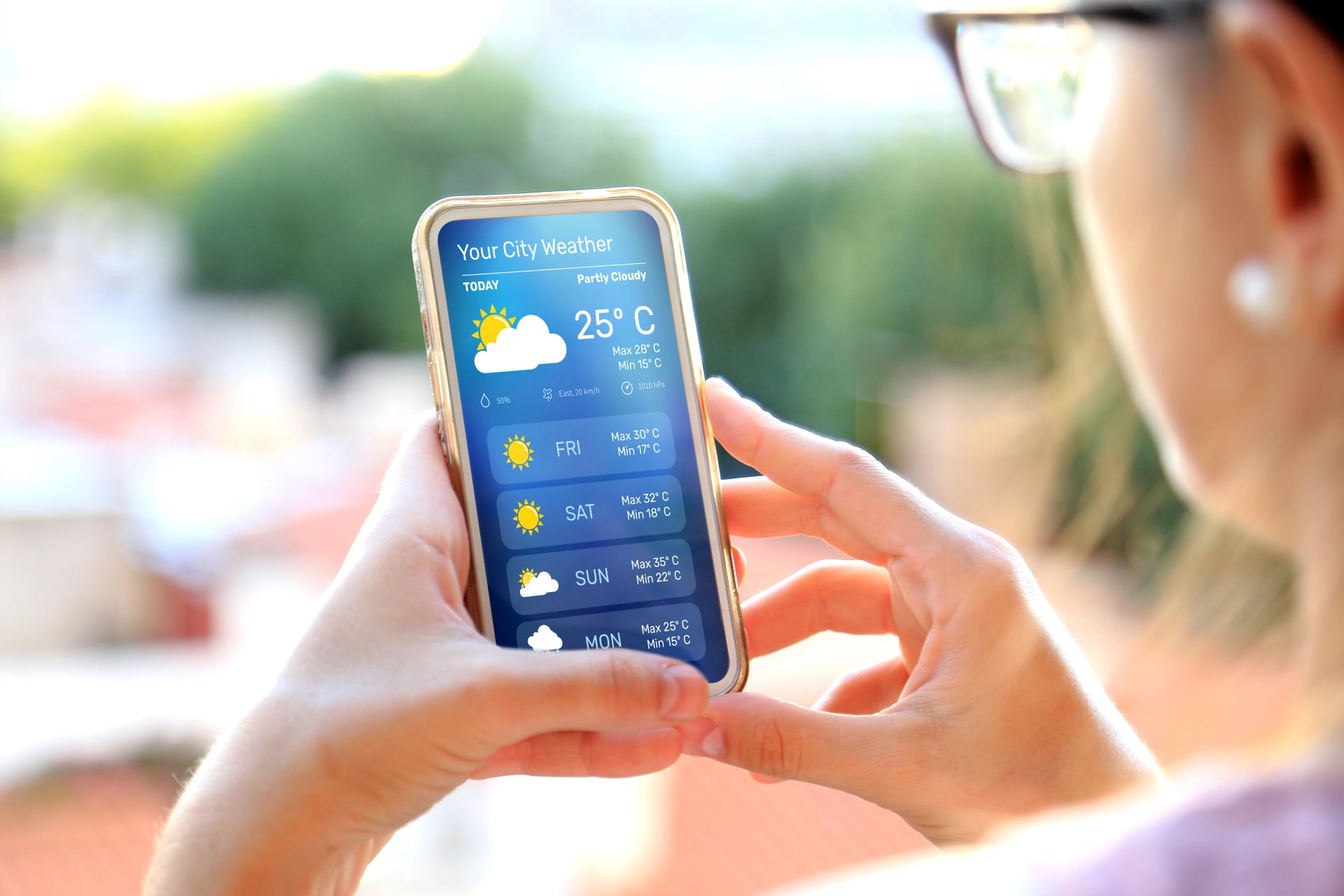
When planning your cycling routes, it’s smart to use reliable weather sources. These two are among the best for Croatia:
DHMZ (Croatian Meteorological and Hydrological Service): Croatia’s official national service. It provides detailed 3- and 7-day forecasts, radar, marine forecasts, and warnings for storms or extreme conditions.
Meteoblue: Offers high-resolution forecasts, hourly breakdowns, precipitation probability, wind models, and multi-day trend graphs.
So, When to Go?
The best time to cycle in Croatia is May–June and September–early October. These months offer the perfect balance of warmth, sunshine, quiet roads, and full access to ferry connections and services. July and August can still be great for early starts and island rides, while winter months are best avoided.
Ready to roll? Explore our bike tours Croatia.



Plan with a cycling expert
Free advice from a team that knows these routes inside out - real people, not a bot

Hassle-Free
We take care of route planning, accommodations, luggage transfers, and all logistics, so you can focus purely on enjoying your ride.

Tried & Tested Adventures
Our cycling routes are hand-picked & tested, to ensure breathtaking landscapes, smooth roads, and maximum safety - giving you the perfect ride every day.

Unbeatable Support
Our 24/7 customer support is where we show our passion, ensuring your cycling holiday runs smoothly and your well-being is always our top priority.

Book with Confidence
We are a financially protected company, fully bonded and insured, keeping your money safe and allowing you to travel with confidence.